



Chikankari Pure Chanderi Silk Lively Lavendar Kurta & Dupatta
Handcrafted at Indiehaat Chikankari Unit in Lucknow, Master Artisan: Arun.

Experience elegance with our Handcrafted Chikenkari Chanderi Silk Kurti Dupatta. Adorned with delicate chikankari embroidery on luxurious Chanderi silk fabric, each set offers a perfect blend of style and tradition, perfect for any occasion.
Work: Chikankari, Hand Dyeing
Measurements: Length: Kurti - 2.9-3.0 meter, Dupatta - 2.4-2.5 meter
Fabric: Chanderi Silk
Package Contains: Unstitched Fabric: Top + Dupatta
Wash Care: Dry clean Preferred. Wash separately. Dry in Shades.
Disclaimer:
Color hues may slightly vary from that which appears in the image due to different screens and displays
Minor irregularities is the uniqueness of handcrafted products and makes each piece exquisite
| Fabric / Material | Chanderi Silk |
| Craft / Technique | Chikankari, Hand Dyeing |
| Colour | Lavender |
| Origin / Cluster | Lucknow |
Chanderi is a traditional ethnic fabric characterized by its lightweight, sheer texture and fine luxurious feel.The fabric borrowed its name from the small town Chanderi in Madhya Pradesh where traditional weavers practice the art of producing textured sarees in cotton and silk.
Exchange: *Easy exchange is available within 3 days of receiving the product.
*No exchanges on home decor items.
*Unboxing video is required.
Return: *Only for damaged/wrong products.
*Unboxing video required.
Learn More
What is the embroidery and dupatta like?
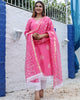
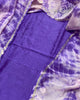
The kurta fabric is lavender with white floral chikankari on the yoke and small tulip buttis. The dupatta is a cream shimmer with gold-toned edges, which lifts the soft lavender without overpowering it. Together they give a gentle, pastel look.
Is lavender warm or cool?
Lavender sits on the cool side, which is why silver jewellery, grey and white pair so easily with it. If you want warmth, the gold edges on the dupatta let you bring in gold accessories without clashing.
Is a salwar or bottom part of the set?
No. The set is a kurta fabric and a dupatta only. It pairs well with a plain churidar, palazzo or cigarette pant, either matching the kurta or picking up the cream of the dupatta. Keeping the bottom plain lets the chikankari and the dupatta carry the outfit.
Where is the embroidery made?
The chikankari comes from Lucknow, the city most closely tied to this craft. Embroiderers there work by hand on the chanderi with fine thread and a range of traditional stitches. That handwork is why tiny variations from one set to the next are normal.
Which kurta styles suit the fabric?
Chanderi is light and sheer with a fine, luxurious feel, so straight, A-line and gently flared kurtas sit well. Keep the cut simple so the embroidered yoke stays the focus. A round or V neck with three-quarter sleeves works for office days; a longer length looks dressier with the dupatta spread open.
Will my set look exactly like the photo?
Very close, but not identical. The fabric is dyed by hand, so the shade can vary slightly between pieces. The chikankari is hand-embroidered too, so tiny differences in the stitching are normal, and every screen shows colour a little differently. These variations are part of handmade work.



Let customers speak for us
loved it .

Beautiful saree in fabric of good quality

Service is fine

Roopika Kota Cotton Suit Material (T+D) Pista Green

No comments

Can't describe in a words how much beautiful is this saree❤️
Quality of fabric is very fine
Beyond my expectations ❤️
Thanku indie haat

Thank you

Nice product

Beyond my expectations..... beautiful elegant saree.... fabric is very fine.... finishing of gota patti work is very fine.....
If you want sheen.... prefer indie haat
I have an imaginary picture of kota doria....a very stiff fabric...but when i received.....i saw it was only a myth..... fabric is very soft and comfortable
Thanku indie haat ♥️🥰

Good stuff as promissed
Timly Delivery with tracking idea
Wishing you and your team all the very best

Noor-e-Banaras Linen Suit Dark Lavendar (T+B+D)

The saree is very beautiful as I imagined it would be.The material is feathersoft and the tepchi work is really outstanding!

Excellent fabric,,geuine price and trustworthy site
Excellent

Nice materials as per our expectations, Thank U

RECENTLY VIEWED PRODUCTS
All Products, Best Selling Products, Chanderi Silk Dress Material, Chikankari, Embroidered Crafts, Festive Suits, Kitty & Brunch Suits, New Arrivals, Newest Products, Office & Workwear Suits, Office Party Suits, Puthandu Sale, Rakshabandhan Collection, Savan, Serene Festive Suits, Serene Kitty & Brunch Suits, Serene Office & Workwear Suits, Serene Suits, Silk Dress Material, Suits & Dress Material
