
Exploring Tussar Silk: Traditional Techniques in Contemporary Fashion
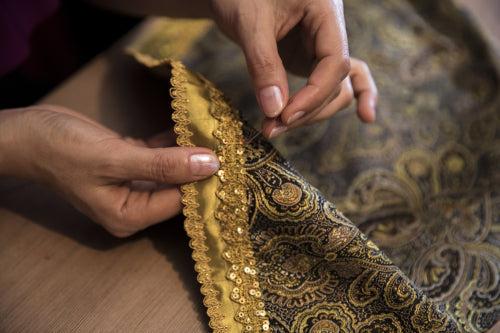
Tussar silk occupies a distinctive place in India's textile heritage, shaped by forest ecosystems, tribal craftsmanship, and centuries of handloom tradition. Known for its naturally textured surface and muted golden sheen, this wild silk differs significantly from cultivated varieties due to its organic sourcing and minimally processed character. Its appeal lies not only in its aesthetic depth but also in the cultural knowledge embedded in its production. From forest collection of cocoons to handwoven fabrics that carry subtle irregularities as marks of authenticity, Tussar silk reflects a slower, more intentional approach to fashion. Today, it continues to influence contemporary design narratives that value material honesty, artisanal skill, and sustainable production practices over industrial uniformity.
Fast fashion erodes cultural heritage, sidelining artisans and reducing traditions to trends. At IndieHaat, we champion India's craftspeople with handcrafted sarees, apparel, décor, and skincare rooted in authenticity. Each piece embodies skill and ethical care. Support artisans and preserve India's timeless legacy Shop Now!
Origins and Natural Heritage of Tussar Silk
Tussar silk, also known as Kosa silk, is produced by Antheraea silkworms that thrive in forest environments and feed on native trees such as Terminalia and Shorea robusta. Unlike mulberry silk, which is cultivated in controlled environments, Tussar silk emerges from a semi-wild ecosystem where cocoons are often collected from natural habitats. This connection to forest biodiversity gives the fabric its distinct texture and earthy character.
The traditional processing of Tussar silk involves sun-drying cocoons or allowing moths to emerge in non-violent “Ahimsa” practices before the fibers are reeled, spun, and woven. This careful approach preserves the natural strength and irregularity of the yarn, resulting in fabrics that feel organic and visually rich. Over time, this textile has become closely associated with regions of India where forest-based livelihoods and weaving traditions intersect, particularly in eastern and central belts.
According to documented textile history, Tussar silk also known as Kosa silk has deep ecological and cultural roots shaped by forest-based ecosystems and tribal craftsmanship. It is produced by Antheraea silkworms that feed on native forest trees such as Terminalia and Shorea robusta, and is often collected from semi-wild environments rather than fully controlled cultivation systems. This results in a naturally textured fiber with a distinctive golden hue and breathable structure. The production process typically involves sun-drying cocoons or adopting Ahimsa practices where moths are allowed to emerge before reeling.
The fibers are then spun and woven into fabric that retains its organic irregularities, making each piece unique. Over time, Tussar silk has become an important material in sustainable and ethical fashion movements due to its low-energy production methods, reliance on natural ecosystems, and support for rural artisan livelihoods. Its adaptability has also allowed it to transition from traditional garments to contemporary fashion applications. More detailed historical and ecological context can be explored through Tussar silk production and history.
More details about its origins and evolution can be found in the documented history of Tussar silk history, which highlights its ecological roots and longstanding cultural importance across artisan communities.
The Bhagalpur Weaving Tradition
Bhagalpur, often referred to as India's Silk City, represents one of the most important centers of Tussar silk weaving. The region has nurtured a weaving heritage that spans over 200 years, sustained by generations of artisan families who have preserved handloom techniques through changing economic landscapes. This continuity is not just historical it remains deeply embedded in the daily rhythms of weaving communities.
Bhagalpur has played a pivotal role in sustaining India's Tussar silk heritage, with a weaving tradition that spans over two centuries and continues to thrive through artisan communities such as the Ansari, Momin, and Tanti families. The region's silk production ecosystem begins with the sourcing of cocoons from forest environments, followed by labor-intensive processes including reeling, degumming, dyeing, and weaving on traditional wooden handlooms. Each stage requires significant skill and patience, often taking several days to complete a single textile piece such as a saree. This craftsmanship results in fabrics known for their natural sheen, textured surface, and subtle irregularities that distinguish authentic Bhagalpuri Tussar silk. Today, the ecosystem supports more than 30,000 handlooms, making it one of the most significant handloom clusters in India.
The tradition has also adapted to global markets, with artisans and designers collaborating to create fusion textiles that blend heritage motifs with contemporary aesthetics. These efforts are increasingly tied to sustainability narratives, emphasizing slow production, cultural preservation, and direct artisan engagement. Further insight into this living tradition can be explored through Bhagalpur Tussar weaving traditions.
Within Bhagalpur's handloom ecosystem, thousands of artisans from diverse weaving communities contribute to production processes that include reeling, degumming, dyeing, and weaving on traditional wooden looms. Each stage requires patience and precision, with many fabrics taking days to complete depending on complexity and design detail.
At its peak, Bhagalpur's weaving ecosystem supports more than 30,000 handlooms, making it one of the most significant clusters for Tussar silk production in India. This scale reflects not industrial automation, but rather the resilience of decentralized craft networks that continue to function through household-based and small workshop production models.
The region's cultural and economic importance is further documented in studies of Bhagalpur weaving tradition, which highlights how artisan clusters have maintained relevance in both domestic and international textile markets while adapting to evolving design preferences.
From Forest to Fabric: the Making of Tussar Silk
The journey of Tussar silk begins deep within forest ecosystems where silkworms naturally form cocoons on host trees. These cocoons are carefully collected, ensuring minimal disruption to surrounding biodiversity. Once gathered, they undergo a sequence of traditional processes that transform raw natural material into fine handwoven fabric.
The initial stage involves cleaning and drying the cocoons, which helps prepare the fibers for reeling. The yarn is then extracted and spun, often retaining slight variations in thickness that contribute to the fabric's signature texture. Unlike mass-produced textiles, these variations are not treated as flaws but as defining characteristics of authenticity.
After spinning, the yarn is dyed using traditional or contemporary techniques before being woven on handlooms. The weaving process itself is highly manual, relying on the skill and rhythm of artisans who translate design patterns into fabric through repeated, precise movements. The final textile often carries subtle irregularities, soft sheen variations, and a tactile depth that machine-made fabrics rarely replicate.
Design Evolution in Contemporary Fashion
In recent years, Tussar silk has moved beyond traditional sarees and ceremonial garments to become a material of experimentation in contemporary fashion. Designers are increasingly exploring its adaptability across structured silhouettes, fusion wear, scarves, jackets, and even modern home décor applications. This shift reflects a broader industry interest in textiles that combine heritage value with modern versatility.
The natural texture of Tussar silk makes it particularly suitable for designs that emphasize minimalism and material integrity. Rather than masking its irregularities, designers often highlight them as part of the garment's aesthetic identity. This approach aligns with a growing appreciation for fabrics that feel grounded in origin and process rather than industrial perfection.
Color treatments, embroidery techniques, and surface embellishments are also being reinterpreted to complement the fabric's organic base. The result is a hybrid design language where traditional weaving meets contemporary styling, allowing Tussar silk to transition seamlessly between cultural and modern contexts.
Sustainability and Ethical Craft Practices
Tussar silk is closely associated with sustainable textile practices due to its reliance on natural ecosystems and hand-based production methods. Since much of its production involves forest-collected cocoons and manual weaving processes, it inherently supports lower energy consumption compared to industrial textile manufacturing.
Equally important is its role in sustaining rural livelihoods. Artisan communities engaged in Tussar silk production often depend on weaving as a primary or supplementary source of income. This creates a decentralized economic structure where value is distributed across multiple stages of production rather than concentrated in large-scale factories.
The use of natural fibers, traditional techniques, and localized production networks also contributes to the preservation of cultural knowledge. These practices ensure that weaving skills, design motifs, and material understanding are passed down through generations, maintaining continuity in a rapidly changing fashion ecosystem.
Global Appeal and Modern Market Relevance
Tussar silk has gained increasing recognition in international fashion circles due to its distinctive aesthetic and sustainable profile. Markets in regions such as the United States, Europe, the United Kingdom, and beyond have shown interest in handcrafted textiles that offer authenticity and traceability. This global attention has encouraged designers and brands to reinterpret traditional Indian fabrics for contemporary audiences.
Its appeal lies in its ability to bridge cultural storytelling with modern design expectations. While rooted in specific regional traditions, Tussar silk adapts well to global fashion sensibilities that prioritize sustainability, uniqueness, and artisanal value. This makes it a compelling material for designers seeking alternatives to mass-produced fabrics.
At the same time, its continued relevance depends on preserving the integrity of its production ecosystem. As demand grows, maintaining balance between craft authenticity and market expansion remains essential to ensuring that Tussar silk continues to represent both cultural heritage and contemporary innovation.
Tussar Silk for Modern Living
Tussar silk stands as a living example of how traditional craft systems can remain relevant in modern fashion landscapes. Its origins in forest ecosystems, its deeply rooted weaving traditions, and its evolving role in contemporary design collectively highlight a textile that is both historical and forward-looking. From Bhagalpur's handloom clusters to global fashion markets, Tussar silk continues to embody a dialogue between nature, craft, and creativity. As appreciation for handcrafted materials grows, its significance is likely to expand further, reinforcing the value of preserving artisanal knowledge in a rapidly industrializing world.
Frequently Asked Questions
What makes Tussar silk different from regular mulberry silk?
Tussar silk, also called Kosa silk, is produced by Antheraea silkworms that feed on forest trees like Terminalia and Shorea robusta, rather than in the controlled farming environments used for mulberry silk. Because cocoons are often collected from semi-wild forest settings, the resulting fiber has a naturally textured surface, a muted golden sheen, and slight irregularities that are considered marks of authenticity rather than flaws.
Why is Bhagalpur considered the center of Tussar silk weaving in India?
Bhagalpur, known as India's Silk City, has sustained a Tussar weaving tradition for more than 200 years through artisan families who pass down handloom techniques across generations. The region's ecosystem still supports over 30,000 handlooms, making it one of the largest and most significant Tussar silk production clusters in the country.
Is Tussar silk considered a sustainable and ethical fabric choice?
Yes, Tussar silk is widely associated with sustainable fashion because its production relies on forest-collected cocoons and manual, low-energy weaving processes rather than industrial manufacturing. It also supports decentralized rural livelihoods, helping artisan communities earn income while preserving traditional weaving knowledge and cultural craftsmanship for future generations.
Disclaimer: The above helpful resources content contains personal opinions and experiences. The information provided is for general knowledge and does not constitute professional advice.
You may also be interested in: How Traditional Crafts Inspire Modern Design - Indiehaat.com
Fast fashion erodes cultural heritage, sidelining artisans and reducing traditions to trends. At IndieHaat, we champion India's craftspeople with handcrafted sarees, apparel, décor, and skincare rooted in authenticity. Each piece embodies skill and ethical care. Support artisans and preserve India's timeless legacy Shop Now!
Powered by flareAI.co