
Inside the Supply Chains Behind Indias Handwoven Textiles
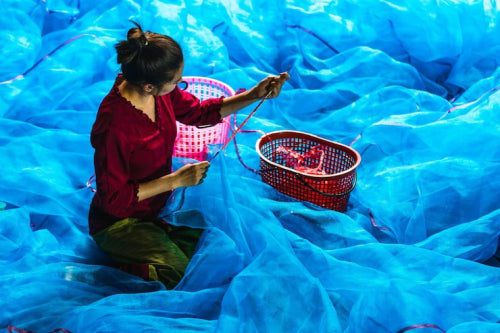
In remote Indian villages, the steady beat of handlooms has sounded for generations. Today that ancient rhythm powers a modern supply chain carrying handwoven linen, silk, and cotton across oceans to discerning customers in the United States, United Kingdom, Australia, Singapore, and the United Arab Emirates. As shoppers increasingly search for products that tell a story of ethical production and genuine craftsmanship, these textiles sourced directly from artisans are experiencing renewed global interest.
Fast fashion erodes cultural heritage, sidelining artisans and reducing traditions to trends. At IndieHaat, we champion India's craftspeople with handcrafted sarees, apparel, décor, and skincare rooted in authenticity. Each piece embodies skill and ethical care. Support artisans and preserve India's timeless legacy Shop Now!
The Enduring Value of India's Handwoven Heritage
Handwoven textiles in India represent far more than cloth. Each length of fabric condenses centuries of specialized knowledge into every thread. Whether it is the textured simplicity of khadi or the luminous complexity of silk brocades, these materials carry cultural memory and technical mastery passed quietly from one generation to the next.
Global tastes have shifted decisively toward traceable, responsibly made goods. Shoppers in premium markets no longer accept anonymous, factory-made alternatives when they can choose pieces that reflect individual skill and environmental consideration. This change has lifted handwoven Indian textiles from niche tradition into a serious category within international home décor and fashion.
Market Momentum and Key Growth Drivers
Sustainability now ranks among the strongest forces reshaping demand. Buyers in the US, UK, and Australia show clear preference for natural, low-impact fibers, creating tailwinds for producers who work exclusively with pure linen, silk, and cotton.
Industry data confirm the expansion. According to IMARC Group research, the India home textile market reached USD 4.30 billion in 2024 and is forecast to climb to USD 6.60 billion by 2033, registering a compound annual growth rate of 4.84% between 2025 and 2033. Rising disposable incomes, continued urbanization, and stronger interest in attractive home environments fuel this trajectory. Segments such as bed linens, curtains, cushions, and towels are expanding particularly quickly as both local and international labels respond to the appetite for sustainable and organic options.
A separate analysis from TechSci Research places the wider India home furnishing market at USD 6.96 billion in 2025, with projections indicating growth to USD 11.51 billion by 2031 at an 8.75% CAGR. Urban millennials and Generation Z consumers lead this surge, favoring eco-conscious, personalized, and higher-quality furnishings. Social media inspiration, easier online purchasing, and government housing initiatives further accelerate the trend.
Even within the specialized domain of handmade floor coverings, momentum is evident. Grand View Research estimates the India handmade carpet and rug market at USD 56.4 million in 2024, expected to advance at an 8.0% CAGR from 2025 to 2030. Consumers increasingly select these items to achieve distinctive, heritage-rich interiors that stand apart from mass-produced alternatives.
Tracing the Journey from Loom to Customer
Consider a single length of handwoven linen emerging from a loom in rural West Bengal. After finishing, the fabric moves through minimal intermediaries before reaching an online marketplace that sells directly to international buyers. Platforms that prioritize artisan partnerships such as those emphasizing unique designs and exclusive use of linen, silk, and cotton shorten the traditional chain, improve artisan compensation, and guarantee provenance.
Official efforts reinforce these private initiatives. The India Handloom Brand, administered by the Ministry of Textiles, applies rigorous quality standards and promotes certified products both inside India and in export markets. Buyers gain confidence from visible authentication.
Independent verification systems add further assurance. Craftmark certification confirms that items are genuinely handmade, produced under fair conditions, and traceable to their origin important signals for customers thousands of miles away who cannot inspect goods in person.
Structural Obstacles That Remain
Progress coexists with persistent difficulties. Many rural weavers still struggle to secure consistent supplies of quality yarn, up-to-date equipment, or affordable working capital. International orders arrive in uneven waves, forcing small producers to either overstock or pause operations.
The supply chain itself stays fragmented. Cotton cultivators, natural dyers, weavers, and logistics providers operate with limited alignment, generating inefficiencies, delays, and avoidable losses. Meanwhile, inexpensive synthetic textiles and rapid-turnaround fashion continue to capture price-sensitive segments, making it harder for authentic handwoven goods to compete on cost alone.
Customer objections frequently surface as well. The higher price points driven by skilled labor, limited production volumes, and ethical practices can appear steep compared with mass-market options. Equally important, the inability to handle or closely examine fabric before purchase creates hesitation, especially among buyers in distant markets such as Singapore and the UAE.
Pathways Toward Greater Resilience and Scale
Digital channels offer one of the clearest opportunities. Mature e-commerce ecosystems in the United States, Australia, and Singapore allow artisans to present rich visual storytelling high-resolution images, short videos of the weaving process, and detailed origin notes that partially compensates for physical distance.
Public-sector support continues to expand reach. The Handloom Export Promotion Council arranges trade delegations, buyer-seller meets, and participation in major international exhibitions, generating concrete orders and long-term relationships.
Emerging technologies promise additional improvements. Blockchain-based traceability, for example, could eventually let customers verify every step from raw fiber to finished product, strengthening trust without sacrificing the human element central to handwoven work.
Overcoming Price and Trust Concerns
Price sensitivity deserves candid discussion. Hand production demands time, attention, and finite capacity costs that large-scale manufacturing sidesteps. Yet for consumers who prioritize environmental responsibility, cultural preservation, and one-of-a-kind design, the investment delivers value that extends well beyond the immediate purchase.
Transparency addresses trust more directly than any other tactic. When platforms share artisan interviews, loom-side footage, and third-party certifications, skepticism diminishes. In regions where ethical consumption already influences buying decisions particularly the United Kingdom and the United Arab Emirates these elements often prove decisive.
A Future Shaped by Tradition and Innovation
India's handwoven textile ecosystem sits at an inflection point. Deep-rooted techniques meet contemporary expectations for accountability, sustainability, and distinctiveness. The same qualities that once limited scale small-batch production, natural fibers, artisan dependence now position the sector favorably as global tastes evolve.
The opportunity belongs to those willing to engage thoughtfully. Businesses can build lasting supply relationships that reward skill and stewardship. Individual buyers can choose pieces that carry meaning beyond decoration. In either case, the decision supports living craftsmanship and helps sustain communities that have preserved these traditions for centuries.
Every handwoven textile that reaches a home abroad closes one more link in an unbroken chain. It reminds us that the most compelling objects are rarely the fastest or cheapest to produce they are the ones made with care, intention, and respect for both people and place.
Frequently Asked Questions
What makes Indian handwoven textiles more expensive than mass-produced alternatives?
Handwoven textiles from India cost more because they require skilled labor, time-intensive hand production, and limited capacity that large-scale manufacturing doesn't face. Each piece is crafted using natural fibers like linen, silk, and cotton through traditional techniques passed down through generations. For consumers who value environmental responsibility, cultural preservation, and unique design, the investment delivers value that extends beyond the immediate purchase.
How can I verify that Indian handwoven textiles are genuinely handmade and ethically produced?
Look for official certifications like the India Handloom Brand (administered by the Ministry of Textiles) and Craftmark certification, which confirm items are genuinely handmade, produced under fair conditions, and traceable to their origin. Many platforms also provide transparency through artisan interviews, loom-side footage, and detailed origin notes that let buyers verify authenticity. Emerging technologies like blockchain-based traceability are beginning to offer even more verification options for tracking products from raw fiber to finished piece.
Which countries are the largest markets for Indian handwoven textiles?
The primary international markets for Indian handwoven textiles include the United States, United Kingdom, Australia, Singapore, and the United Arab Emirates. These regions show strong preference for sustainable, traceable, and responsibly made goods, with consumers increasingly choosing handcrafted pieces that reflect individual skill and environmental consideration over anonymous factory-made alternatives. The UK and UAE markets particularly value ethical consumption factors when making purchasing decisions.
Disclaimer: The above helpful resources content contains personal opinions and experiences. The information provided is for general knowledge and does not constitute professional advice.
You may also be interested in: The Role of Indian Artisans in Creating Ethical and Sustainable Fashio
Fast fashion erodes cultural heritage, sidelining artisans and reducing traditions to trends. At IndieHaat, we champion India's craftspeople with handcrafted sarees, apparel, décor, and skincare rooted in authenticity. Each piece embodies skill and ethical care. Support artisans and preserve India's timeless legacy Shop Now!
Powered by flareAI.co