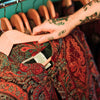
Handwoven Dress Materials Offer Customization for Indian Buyers

A customer unfurls a bolt of handwoven Banarasi silk, its intricate patterns shimmering under the shop's lights. She's not merely purchasing fabric she's crafting a vision for a bespoke lehenga, designed to her precise specifications for a family celebration. This moment, echoed in homes and boutiques from Delhi to Dubai, marks a pivotal shift in fashion. Handwoven dress materials, long cherished for ceremonial wear, are now driving a movement toward personalized, sustainable style. At the forefront is IndieHaat, a platform that bridges Indian artisans with buyers seeking authenticity and individuality in their wardrobes.
The global handloom products market, valued at USD 8.32 billion in 2024, is expected to grow to USD 16.62 billion by 2032, achieving a compound annual growth rate (CAGR) of 9.24%, as reported by Fortune Business Insights. Asia Pacific, led by India, holds a commanding 55.77% market share, fueled by a rising appreciation for artisanal craftsmanship. IndieHaat capitalizes on this trend, offering handwoven linen, silk, and cotton sourced directly from rural Indian weavers. Serving markets in India, the US, Singapore, Australia, the UK, and the UAE, the brand weaves a global tapestry of heritage-conscious consumers.
The Power of Personalization
Step into any bustling Indian bazaar, and the rhythmic clatter of sewing machines signals a thriving culture of bespoke tailoring. For today's consumers, particularly younger generations, customization is not a luxury but an expectation. Handwoven dress materials are uniquely suited to this demand. A length of jamdani cotton can transform into a flowing salwar suit or a tailored jacket, shaped by the wearer's imagination. This versatility challenges the uniformity of fast fashion, offering a creative antidote to mass-produced clothing.
The Indian ethnic wear market, valued at USD 197.2 billion in 2024, is projected to reach USD 558.5 billion by 2033, with a robust CAGR of 12.6%, according to Business Research Insights. Weddings and festivals drive this growth, but a deeper cultural shift is at play. Young buyers seek garments with narrative khadi echoing India's independence movement or Shantipuri sarees from West Bengal's renowned looms, as detailed in the Shantipur Handloom Industry overview. IndieHaat's small-batch fabrics, each distinct, cater to those who prize exclusivity over conformity.
Sustainability further amplifies the appeal. Handlooms, crafted from natural fibers, embody the principles of slow fashion, emphasizing durability over disposability. The global handloom market is forecasted to reach USD 17.0 billion by 2033, with an 8.1% CAGR, propelled by eco-conscious demand, per News.Market.US. By focusing exclusively on linen, silk, and cotton, IndieHaat aligns with this ethos, enabling buyers to express their values through their clothing choices.
IndieHaat's Artisan-Centric Model
IndieHaat's strength lies in its direct partnerships with artisans, many hailing from weaving hubs like Shantipur and Phulia, celebrated for their cotton sarees and intricate Tangail-Jamdani weaves. These artisans are not mere vendors but collaborators, their craft preserved through fair wages and direct sourcing that bypasses exploitative middlemen. This model, while cost-intensive, ensures authenticity and quality. IndieHaat's Instagram feed, alive with posts from customers like @anilarubyraj and @ani_lakshmi, displays handwoven sarees and kurtas, each linked to the artisan's village a narrative woven into every thread.
In contrast, competitors like Suta and FabIndia often emphasize ready-to-wear collections, appealing to a wider but less niche audience. IndieHaat's focus on unstitched dress materials invites customization, making it a standout. A buyer in Australia might fashion a handwoven silk into a fusion dress, while one in the UAE might create a traditional anarkali. This adaptability transforms fabric into a medium for personal storytelling, a hallmark of IndieHaat's appeal.
Social media is a powerful ally in this mission. Through Instagram, Facebook, and YouTube, IndieHaat shares videos of artisans at their looms, their hands coaxing intricate patterns from silk and cotton. These stories build trust, addressing the “trust deficit” that often hampers online handloom sales. Customers need assurance that their purchases support real communities, not impersonal factories. A post from @drminimalhotra praises a silk dupatta's “ethereal drape,” underscoring IndieHaat's commitment to quality and transparency.
Overcoming Market Challenges
Handwoven dress materials face notable hurdles in winning over skeptical buyers. Pricing is a primary concern. The labor-intensive nature of handloom weaving makes it pricier than fast fashion alternatives. A meter of handwoven chanderi might outcost a synthetic dress, but IndieHaat emphasizes longevity. A single fabric can be reimagined across seasons, offering value that disposable trends cannot match.
The inability to touch and feel products online is another obstacle. Without physical stores, IndieHaat relies on vivid product descriptions, high-resolution images, and YouTube videos showcasing fabric's texture and drape. Yet hesitation persists among some shoppers. To bridge this gap, IndieHaat is exploring augmented reality (AR) tools, allowing virtual “try-ons” of fabrics a strategy aligned with the 20% AR adoption rate in ethnic wear, as noted by Global Growth Insights.
Trust remains a critical barrier in a market rife with imitation handlooms. IndieHaat counters this with radical transparency, detailing each fabric's origin and artisan. Instagram posts often highlight weavers by name, fostering a personal connection that competitors like Jaypore or Okhai don't always replicate. This openness reassures buyers that their investment supports genuine craftsmanship.
Expanding Global Reach
IndieHaat's ambitions stretch far beyond India's borders. In the US and UK, where diaspora communities drive demand for ethnic wear, handwoven dress materials serve as a cultural lifeline. The global ethnic wear market, valued at USD 108,068.56 million in 2024, is expected to grow to USD 198,178.9 million by 2033, with a CAGR of 6.97%, per Global Growth Insights. A London-based buyer might weave a saree for a festive gathering, while a Dubai resident might design a contemporary gown. IndieHaat's bold jamdani patterns and minimalist linen weaves cater to these varied preferences.
This global demand also mitigates a common e-commerce challenge: high return rates. Tailored garments, crafted to fit, are rarely returned, giving IndieHaat an edge. The brand could further strengthen its position by offering styling guides or collaborating with tailors in markets like Singapore or the UAE, where “India-inspired” fashion is gaining traction. Such strategies would distinguish it from peers like Chidiyaa or Dressfolk.
Crafting a Lasting Legacy
Handwoven dress materials are more than textiles they are a stand against fleeting fashion, a tribute to artisanal skill, and a canvas for individuality. IndieHaat, with its artisan-driven approach, is well-positioned to shape this future. The data is compelling: the handloom sarees market is projected to grow from USD 3.99 billion in 2025 to USD 7.29 billion by 2032, with a CAGR of 8.99%, according to Fortune Business Insights. Yet the story transcends numbers. These fabrics carry the soul of places like Shantipur, their threads connecting weavers to wearers across continents.
To maintain its lead, IndieHaat could embrace innovations like artisan livestreams or region-specific fit guides, easing buyer concerns and enhancing engagement. As a Phulia weaver remarked in an Instagram video, “Each weave holds my dreams.” This sentiment, embedded in every IndieHaat fabric, resonates deeply. In an era of mass production, handwoven dress materials offer a rare gift: the chance to wear a piece of history, crafted uniquely for you.
Disclaimer: The above helpful resources content contains personal opinions and experiences. The information provided is for general knowledge and does not constitute professional advice.
You may also be interested in: Unveiling the Fabric of Creation: 8 Techniques That Shape Our
Fast fashion erodes cultural heritage, sidelining artisans and reducing traditions to trends. At IndieHaat, we champion India's craftspeople with handcrafted sarees, apparel, décor, and skincare rooted in authenticity. Each piece embodies skill and ethical care. Support artisans and preserve India's timeless legacy Shop Now!
Powered by flareAI.co