
Tussar Sarees Gain Popularity as Sustainable Fashion Trend in India
Quick Listen:
In the vibrant weaving hubs of Phulia, Nadia, where the rhythmic clatter of looms echoes through narrow alleys, a transformation is taking shape. Tussar sarees, with their lustrous golden sheen and intricate patterns, are transcending their traditional roots to become a powerful emblem of sustainable fashion. As India confronts the environmental fallout of fast fashion, these sarees woven from the cocoons of wild silkworms are emerging as a compelling alternative, blending heritage with eco-conscious innovation. Platforms like IndieHaat are driving this movement, linking skilled artisans directly with a global audience seeking authenticity and ethical craftsmanship. What fuels this resurgence, and can Tussar silk redefine luxury in a market saturated with synthetic fabrics?
The Essence of Tussar Silk
Known as “kosa” in Sanskrit, Tussar silk is a product of nature's untamed beauty. Unlike conventional mulberry silk, which depends on domesticated silkworms, Tussar is harvested from wild Antheraea moths that thrive on Terminalia trees, jamun, and oak in South Asia's forests. The fabric's coarse texture and natural, deep-gold hue exude a raw elegance that feels both timeless and tactile. Its eco-friendly credentials shine in the “Ahimsa” or non-violent production method, where artisans allow moths to emerge from their cocoons before harvesting the silk, avoiding harm to the silkworms. This sustainable practice, as highlighted by Mayflower Cruises, resonates with a growing demand for cruelty-free textiles.
The market data underscores Tussar's rising prominence. According to Market Research Intellect, the global Tussar silk market, valued at USD 210 million in 2024, is expected to reach USD 350 million by 2033, with a robust CAGR of 7.2% from 2026 to 2033. Similarly, Global Growth Insights reports the market at USD 350.71 million in 2023, projecting growth to USD 501.44 million by 2032 at a 4.1% CAGR. This upward trajectory reflects a consumer shift toward textiles that marry sophistication with environmental stewardship.
A Revival Rooted in Tradition
Step into a high-end boutique in Bengaluru or Hyderabad, and Tussar sarees command attention, their earthy tones and subtle sheen drawing admiring glances. Yet their allure extends far beyond aesthetics. These sarees embody centuries of artisanal expertise, crafted by weavers who preserve techniques handed down through generations. IndieHaat, a platform championing India's handcrafted textiles, is spearheading this revival. By sourcing directly from weavers in regions like Jharkhand and Bihar, it ensures fair compensation and sustainable practices, while showcasing Tussar sarees to an international clientele.
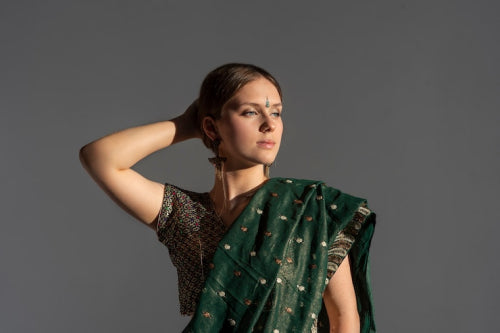
Younger audiences are embracing Tussar's cultural resonance. From Chennai's fashion influencers to Mumbai's celebrity stylists, social media is abuzz with Tussar sarees styled in contemporary ways think minimalist blouses or bold jewelry pairings that captivate Gen Z. Globally, Tussar's versatility is gaining recognition. Designers are increasingly incorporating Tussar silk into modern ensembles, highlighting its adaptability beyond traditional drapes. This fusion of heritage and modernity positions Tussar as a standout in a textile industry often criticized for its lack of originality.
Empowering Artisans, Transforming Lives
Every Tussar saree tells a story of perseverance. In Bhagalpur, Bihar a key Tussar silk hub weaving is more than a craft; it's a way of life. For many artisans, it's a path to economic stability. IndieHaat's direct-sourcing model has been a game-changer, bypassing exploitative middlemen and enabling weavers to earn sustainable incomes. Artisans have shared how steady orders through IndieHaat have supported significant life improvements, such as funding education for their children. This empowerment lies at the heart of sustainable fashion, where ethical production is as vital as the final product.
The handloom sector's growth mirrors this momentum. Valued at USD 8.32 billion in 2024, the global handloom products market is projected to reach USD 16.62 billion by 2032, with a 9.24% CAGR, according to Fortune Business Insights. Asia Pacific, led by India, holds a 55.77% market share, fueled by demand for unique, eco-friendly, and culturally rich products. Tussar sarees, with their blend of tradition and sustainability, are a driving force in this expansion.
Navigating the Roadblocks
Scaling Tussar's success, however, comes with challenges. The labor-intensive process, coupled with the limited yield of wild silkworms, makes Tussar silk costlier than mass-produced alternatives. Synthetic fabrics, which mimic Tussar's luster at a lower price, pose stiff competition. A 2025 study from ArXiv notes that India's small and medium textile enterprises struggle to adopt circular economy models due to undefined metrics and inadequate frameworks, hindering sustainable scaling for Tussar production.
Educating consumers remains a critical hurdle. Many, swayed by fast fashion's affordability, overlook Tussar's environmental and cultural significance. IndieHaat counters this by weaving narratives into its platform, with each saree accompanied by details of its forest origins and the artisan behind it. Yet, in a price-sensitive market, convincing shoppers to invest in sustainable luxury remains an uphill battle.
Seizing Global Opportunities
Despite these obstacles, Tussar sarees are poised for a bright future. Sustainable fashion is no longer a trend but a mandate, with eco-conscious brands earning loyalty from consumers who value ethics over excess. IndieHaat's commitment to transparency and fair trade positions it to lead this charge. Partnerships with designers and influencers could elevate Tussar sarees to the status of global luxury staples, akin to ethically sourced linen or organic silk.
The international market offers immense potential. Rising incomes in emerging economies and a growing appetite for artisanal products create fertile ground for Tussar's expansion. As noted in a LinkedIn analysis, government efforts in India and China to modernize sericulture and streamline supply chains are enhancing Tussar's quality and accessibility. These initiatives could make Tussar more competitive, ensuring its artisanal essence remains intact while reaching wardrobes from London to Singapore.
A Vision for Sustainable Fashion
Browsing IndieHaat's digital shelves, I'm captivated by the array of Tussar sarees some intricately embroidered with zari, others dyed in rich ochres and blues. Each feels like a fragment of India's cultural tapestry, a testament to fashion's potential to inspire change. Industry leaders emphasize that crafts like Tussar silk are pivotal to sustainable fashion's future. One textile expert noted the importance of creating pieces that honor the earth and uplift communities.
The path forward is promising. With consumers demanding accountability and governments bolstering sustainable practices, Tussar sarees could anchor India's fashion narrative. IndieHaat's pioneering efforts demonstrate that style and sustainability are not mutually exclusive. For those seeking a meaningful addition to their wardrobe, a Tussar saree is more than fabric it's a commitment to a greener, more equitable world. As the looms of Phulia continue their timeless dance, they weave not just sarees, but a vision for fashion's future.
Disclaimer: The above helpful resources content contains personal opinions and experiences. The information provided is for general knowledge and does not constitute professional advice.
You may also be interested in: Unleash Your Personal Style: Authentic Fashion at Indiehaat
Fast fashion erodes cultural heritage, sidelining artisans and reducing traditions to trends. At IndieHaat, we champion India's craftspeople with handcrafted sarees, apparel, décor, and skincare rooted in authenticity. Each piece embodies skill and ethical care. Support artisans and preserve India's timeless legacy Shop Now!
Powered by flareAI.co