
Artisan-Crafted Footwear Combines Comfort with Cultural Design
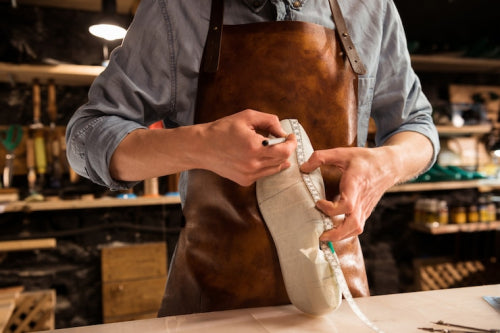
In a sunlit workshop in Rajasthan, an artisan leans over a sheet of vegetable-tanned leather, his hands deftly weaving cotton thread through intricate designs. The faint clatter of brass nails and the steady rhythm of a hammer fill the air. He's crafting a pair of Sindhi mojaris, shoes that embody South Asia's rich cultural tapestry in every stitch. These aren't mere footwear they're heirlooms, blending heritage with contemporary appeal. Across India, craftsmen are revitalizing traditional shoes like jutis, kolhapuris, and mojaris, merging time-honored techniques with modern comfort. This resurgence is capturing global attention.
The demand for artisanal goods is skyrocketing. A global handicraft market report projects the sector, encompassing handcrafted footwear, will soar to USD 1,160.83 billion by 2035, with a 10.5% CAGR. From Delhi to Dubai, consumers are turning away from mass-produced shoes, seeking sustainable, distinctive alternatives. Platforms like IndieHaat, an online hub for India's grassroots artisans, are leading this charge, linking traditional crafts with eco-conscious buyers. What elevates these shoes beyond fashion? It's their fusion of comfort, cultural depth, and ethical craftsmanship.
Heritage Meets Innovation
India's handcrafted footwear traces its roots to ancient trade routes. Sindhi mojaris, a staple of Indian and Pakistani craftsmanship, are fashioned from tanned leather, their uppers adorned with cowry shells, mirrors, or ceramic beads. Embroidered with vibrant threads, they're stitched to the sole using eco-friendly cotton, reinforcing the leather's durability. Kolhapuri chappals, born in Maharashtra, are prized for their open-toe design and robust leather soles, offering breathability and resilience. Jutis, with their pointed toes and ornate embroidery, evoke the grandeur of Punjab and Rajasthan.
These age-old designs are now evolving. Artisans are embracing sustainable materials like jute soles and organic cotton to meet the rising demand for eco-friendly footwear. The sustainable footwear market, valued at USD 11.11 billion in 2024, is expected to reach USD 28.79 billion by 2033, growing at a 11.21% CAGR. This transformation extends to aesthetics. Urban designers are partnering with rural artisans to craft fusion footwear: kolhapuris with sleek leather finishes or mojaris featuring phulkari embroidery for gender-neutral appeal. These pieces embody slow fashion durable, meaningful, and timeless.
Digital platforms have revolutionized visibility. Social media, with videos of artisans stitching or dyeing leather, has brought these crafts to global audiences. IndieHaat's online marketplace amplifies this reach, enabling a Punjab shoemaker to sell directly to a buyer in Paris. This shift empowers artisan communities while satisfying consumer's hunger for authentic, traceable products.
From Silver Screens to City Streets
Stroll through a Bollywood set, and you might catch Kolhapuri chappals in the spotlight. Their rustic charm and lightweight comfort have sparked a revival among urban stylists. IndieHaat's artisan network is capitalizing on this trend. In Rajasthan, a shoemaking cluster employs sustainable dyes and hand-stitching to create mojaris that resonate with eco-conscious consumers. In Punjab, a women-led cooperative is reintroducing phulkari embroidery, turning simple flats into vibrant art. These efforts sustain livelihoods, particularly for women and marginalized artisans, as the handicraft industry fuels rural economies.
The buyer base is diverse. Urban professionals opt for jutis, valuing their breathability during long commutes. Eco-minded Gen Z shoppers choose kolhapuris for their biodegradable components. Indian diaspora communities, from London to Los Angeles, purchase mojaris to maintain cultural ties. The custom shoes market, valued at USD 779.58 million in 2024 and projected to hit USD 1,198.09 million by 2033 with a 4.65% CAGR, reflects this demand for personalized, heritage-driven footwear. North America, commanding over 55% of the market, leads due to fashion awareness and social media influence.
Navigating Challenges
Despite its potential, the artisan footwear sector faces obstacles. Scaling production while preserving handcrafted quality is a delicate balance. Crafting a pair of mojaris can take days, hindering the ability to meet global demand. Supply chain issues, such as inconsistent material availability or seasonal delays, further complicate operations. Mass-produced “ethnic” footwear, sold cheaply online, threatens artisan's livelihoods by undercutting prices.
Global sizing standards pose another challenge. A juti sized for Mumbai may not fit in Miami, frustrating online shoppers. IndieHaat is addressing this by standardizing measurements, but progress is gradual. Cultural designs, while a strength, carry risks. Indigenous fashion highlights the controversy of misappropriation when non-native designers exploit heritage without fair compensation. Ethical collaboration is essential to honor cultural roots and avoid stereotypes.
A Promising Path Forward
The outlook for artisan footwear is robust. The luxury footwear market, valued at USD 31.73 billion in 2024 and expected to reach USD 44.50 billion by 2033 at a 3.52% CAGR, underscores demand for premium, culturally significant designs. Asia-Pacific, with over 35% market share, thrives on rising incomes and urbanization. IndieHaat envisions strong export potential to the U.S., Europe, and GCC markets, where storytelling through craftsmanship resonates.
Direct-to-consumer models are transforming the industry. By eliminating intermediaries, artisans earn fairer wages, and consumers access authentic goods at reasonable prices. Collaborations with designers are unlocking new possibilities, integrating traditional techniques with modern innovations like cushioned soles or orthotic insoles. These advancements position artisan footwear as a choice for comfort-driven buyers. The broader footwear market, projected to reach USD 588.22 billion by 2030 with a 4.3% CAGR, offers vast opportunities for growth.
Preserving Heritage, Striding Ahead
In an era dominated by fast fashion, artisan footwear stands as a testament to craftsmanship. The task now is to scale this legacy without diluting its essence. Consumers can drive change by supporting ethical brands. Policymakers must bolster fair trade and heritage preservation. Brands should invest in artisan communities, not merely their designs.
As dusk falls over the Rajasthan workshop, the artisan polishes his latest mojaris, their mirrors glinting in the fading light. These shoes are poised for a journey from a village to a global stage, from one wearer to another, each step echoing resilience and reinvention. They remind us that true comfort lies in footwear that honors history while embracing the future.
Disclaimer: The above helpful resources content contains personal opinions and experiences. The information provided is for general knowledge and does not constitute professional advice.
You may also be interested in: Indiehaat | BlockPrinted Cotton Kurta Pyjama Indigo – Indiehaat.com
Fast fashion erodes cultural heritage, sidelining artisans and reducing traditions to trends. At IndieHaat, we champion India's craftspeople with handcrafted sarees, apparel, décor, and skincare rooted in authenticity. Each piece embodies skill and ethical care. Support artisans and preserve India's timeless legacy Shop Now!
Powered by flareAI.co