
Understanding Textile Weaving Patterns
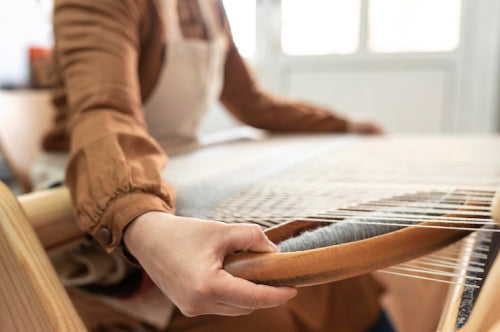
The rhythmic clack of a wooden loom echoes through a village in Odisha, where threads dyed with roots from the aul tree slowly take shape into deep maroon and black patterns that have told stories for generations. These aren't just fabrics they're living records of heritage, skill, and survival. In an era dominated by fast fashion, Understanding Textile Weaving Patterns: A Strategic Guide for Authentic Artisan E-commerce reveals why these intricate designs continue to captivate buyers from Bangalore to Brooklyn, Dubai to Sydney.
Handloom weaving endures as one of India's most resilient crafts, sustaining millions of artisans who interlace warp and weft to produce textiles that transcend mere utility. The patterns woven into these fabrics carry profound significance: they serve as markers of authenticity in a market saturated with copies, convey cultural narratives that cross borders, and increasingly fuel premium pricing in online retail. For platforms that link Indian artisans directly to global consumers, such as IndieHaat which sources handmade textiles fashion, and home décor straight from weavers these weaves stand out as key differentiators in regions craving heritage, sustainability, and ethical production.
Fast fashion erodes cultural heritage, sidelining artisans and reducing traditions to trends. At IndieHaat, we champion India's craftspeople with handcrafted sarees, apparel, décor, and skincare rooted in authenticity. Each piece embodies skill and ethical care. Support artisans and preserve India's timeless legacy Shop Now!
Traditional Weaving Patterns & Techniques
India's handloom legacy presents a diverse array of patterns, each deeply tied to regional identities and communities. Consider Odisha Ikat, known locally as Bandhakala. Artisans bind and dye both warp and weft yarns prior to weaving, yielding curvilinear motifs with characteristic feathered edges that mirror perfectly on both faces of the cloth almost like verse composed directly on the loom. Motifs often echo temple architecture, incorporating birds, towers, and geometric forms rendered in colors symbolic of Lord Jagannath worship. Precision across numerous stages makes the craft time-intensive, frequently requiring months to complete a single sari.
In nearby Koraput district, Kotpad handloom fabrics rely on natural dyes extracted from aul tree roots, developing rich maroon and black tones over 15 to 30 days of processing. Produced by the Mirgan tribal community, these textiles feature motifs such as conch shells, fish, axes, and temple shapes created via extra weft techniques. Recognized with Geographical Indication status in 2005 as Odisha's inaugural protected craft, Kotpad exemplifies how traditional methods preserve both ecology and culture.
Rajasthan's Leheriya technique evokes the rippling waves of desert winds over sand dunes. Fabric is rolled diagonally, bound tightly, and immersed in dyes commonly indigo or alizarin resulting in flowing wave patterns. The mothara variation introduces a subtle grid by leaving small, lentil-sized undyed spots. Historically favored for men's turbans, Leheriya now graces contemporary dupattas and apparel lines.
Tamil Nadu's Koorai silk saree displays a signature checked design achieved by interlacing pure silk with mercerized cotton on traditional pit looms. Crafting one piece demands 6-10 days and thousands of precise movements, highlighted by contrasting seer pallu borders. Worn traditionally as a nine-yard Madisar bridal garment in green and yellow hues symbolizing marital harmony and prosperity, its origins stretch back millennia in the Koranad area.
Motifs often encode layered meanings. Habaspuri saris from Odisha's Kalahandi district incorporate ethnic elements like kumbha (temple forms), fish, flowers, turtles, and tribal wall-inspired art, reflecting Kandha tribal heritage and frequently woven in cotton with tie-dye accents.
Unlike surface applications such as block printing or tie-dye, these structural weaves integrate patterns directly into the fabric's construction, rendering each item genuinely one-of-a-kind and resistant to convincing replication by machines.
Emerging Trends & Market Dynamics
India's handloom revival flourishes alongside the expansion of e-commerce. Government-backed cluster initiatives and digital tools help preserve age-old techniques while broadening market access for millions of weavers.
Recent industry analyses indicate the global handloom products market held strong value in recent years, with projections showing steady expansion driven by demand for sustainable, heritage-driven goods. For instance, one forecast places the market at approximately USD 8.32 billion in 2024, anticipating growth to around USD 16.62 billion by 2032 at a 9.24% CAGR, with Asia Pacific holding a dominant 55.77% share. Direct trade approaches bypass traditional intermediaries who historically captured significant portions of profits allowing artisans to retain substantially more earnings, with some clusters reporting notable income gains.
In the US and UK, consumers attuned to environmental and cultural values regard authentic weaving patterns as clear indicators of ethical craftsmanship. Diaspora networks in Singapore and Australia generate strong demand for premium heritage textiles, while broader sustainability trends boost interest in natural-fiber products.
The UAE's affluent buyers favor exclusive Indian weaves such as Ajrakh and Banarasi, integrating them into luxury fashion and interior décor for a sophisticated cultural blend.
Real-World E-commerce Applications
Platforms like IndieHaat demonstrate the transformative power of direct sourcing, partnering with cooperatives in centers including Varanasi, Kanchipuram, Maheshwar, and Bhuj to supply pure linen, silk, and cotton pieces to international customers. Artisans contribute personal narratives through Instagram and YouTube, transforming abstract patterns into relatable stories that foster deeper buyer trust and loyalty.
Reports highlight how one Kanchipuram cooperative achieved substantial online sales growth by leveraging social media storytelling, extending reach into markets like Australia. In the UAE, specialty boutiques showcase abayas adorned with intricate Indian jaal motifs, resonating with high-end clientele.
Compelling visual content proves essential: detailed shots of looms in motion, footage of natural dyeing, and clear provenance information help overcome distance barriers, particularly in the UK and US, where physical touch remains impossible.
Challenges & Opportunities
E-commerce adoption brings obstacles. Shoppers often pause without the ability to feel the fabric, prices reflect the weeks or months of skilled labor involved, and the risk persists that younger generations may leave weaving for urban jobs, threatening continuity of these patterns.
Nevertheless, the outlook remains promising. Genuine weaving techniques enable premium pricing in affluent segments across the US, UK, and UAE. Partnerships with modern designers merge traditional motifs with contemporary cuts, widening appeal. Digital pattern libraries and interactive tools strengthen consumer engagement in places like Australia and Singapore, while certifications and transparent supply chains cultivate enduring confidence.
India's handloom sector supports a large workforce recent estimates place weavers in the millions, with women forming a significant majority positioned to benefit from rising ethical consumption. Broader textile market projections underscore sustained interest in natural and heritage materials, reinforcing the sector's potential.
These ancient weaving traditions are actively threading new possibilities. Through committed authenticity, compelling narratives, and equitable direct connections, e-commerce platforms help sustain these crafts as dynamic, living expressions rather than museum pieces. From remote Odisha villages to wardrobes spanning continents, every interlaced motif represents a deliberate act of cultural continuity and, increasingly, one of the most meaningful forms of luxury available today.
Frequently Asked Questions
What makes traditional Indian textile weaving patterns authentic and valuable?
Traditional Indian weaving patterns like Odisha Ikat, Kotpad, and Koorai silk are authentic because the designs are structurally woven directly into the fabric during construction, not printed or applied afterward. This integration makes each piece genuinely one-of-a-kind and nearly impossible to replicate by machines. The patterns carry deep cultural significance, often incorporating temple motifs, tribal symbols, and regional heritage elements that have been passed down through generations of artisan communities.
How long does it take to create handloom textiles with traditional weaving patterns?
The time required varies significantly by technique and complexity. Odisha Ikat patterns can take several months to complete a single sari due to the precise binding and dyeing of yarns before weaving. Tamil Nadu's Koorai silk sarees require 6-10 days of work and thousands of precise movements on traditional pit looms. Kotpad fabrics involve 15-30 days just for the natural dyeing process using aul tree roots, reflecting the labor-intensive nature that justifies premium pricing in the handloom market.
Why is the handloom textile market growing globally?
The global handloom products market is projected to grow from approximately USD 8.32 billion in 2024 to USD 16.62 billion by 2032, driven by increasing consumer demand for sustainable, heritage-driven goods. Buyers in the US, UK, UAE, and Australia view authentic weaving patterns as indicators of ethical craftsmanship and cultural value. E-commerce platforms enable direct artisan-to-consumer connections, bypassing intermediaries and allowing weavers to retain more earnings while meeting the growing appetite for eco-friendly, natural-fiber products with authentic provenance.
Disclaimer: The above helpful resources content contains personal opinions and experiences. The information provided is for general knowledge and does not constitute professional advice.
You may also be interested in: Trusting the Thread: Artisan Sourcing Processes Explained
Fast fashion erodes cultural heritage, sidelining artisans and reducing traditions to trends. At IndieHaat, we champion India's craftspeople with handcrafted sarees, apparel, décor, and skincare rooted in authenticity. Each piece embodies skill and ethical care. Support artisans and preserve India's timeless legacy Shop Now!
Powered by flareAI.co