
Growing International Demand for Indian Handicrafts
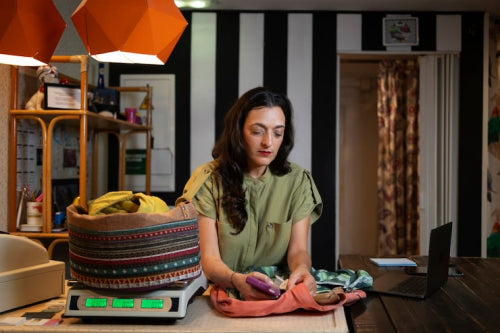
In the narrow streets of Varanasi, the rhythmic clatter of looms mingles with the aroma of fresh dyes, as artisans craft silks that whisper tales of ancient heritage. This timeless scene echoes across India's craft hubs from Surat's bustling markets to Chennai's vibrant workshops where skilled hands are fueling a global revival. Far from mere relics, these creations are powering an economic surge, meeting a worldwide craving for genuine, handcrafted goods in a sea of factory-made uniformity.
Fast fashion erodes cultural heritage, sidelining artisans and reducing traditions to trends. At IndieHaat, we champion India's craftspeople with handcrafted sarees, apparel, décor, and skincare rooted in authenticity. Each piece embodies skill and ethical care. Support artisans and preserve India's timeless legacy Shop Now!
A Booming Global Market
The allure of Indian handicrafts is evident in their journey to distant shores: an intricately embroidered scarf gracing a Paris runway or a Rajasthan wood carving enhancing a New York loft. The global handicraft market, valued at USD 1,107.67 billion in 2024, is anticipated to reach USD 1,218.77 billion in 2025 and soar to USD 2,397.15 billion by 2032, achieving a CAGR of 10.15 percent over the forecast period. Asia Pacific commands a dominant 36.36 percent share underscoring the region's pivotal role in this artisanal renaissance.
At the epicenter lies India, where the handicrafts sector reached USD 4,856.73 million in 2025 and is projected to expand to USD 8,299.45 million by 2034, with a CAGR of 6.13 percent from 2026 to 2034. This growth stems from escalating disposable incomes, a burgeoning interest in ethnic decor, the proliferation of online marketplaces, governmental export incentives, surging tourism, and a planetary pivot toward eco-conscious products. These elements converge to propel the industry forward, transforming traditional crafts into sought-after global commodities.
Government backing is instrumental. The Pehchan scheme, for instance, has enrolled over 3.2 million artisans by 2024, granting them identification and access to markets. In the fiscal year 2024-25, India's handicraft exports (excluding carpets) climbed to INR 33,122.79 crore, a substantial rise from INR 20,082.53 crore in 2014-15. Major destinations include the USA, UK, UAE, Germany, France, and Netherlands, with top exports encompassing woodware, art metal ware, handprinted textiles, embroidered goods, and imitation jewelry segments that continue to define the export landscape.
Thriving Ecosystems and Regional Strengths
India's handicraft domain flourishes within over 700 clusters, engaging approximately 212,000 artisans and yielding more than 35,000 distinct products. Dominated by female artisans at over 56 percent, these hubs such as Surat, Bareilly, Varanasi, Agra, Hyderabad, Lucknow, Chennai, and Mumbai are predominantly rural, harboring immense potential for urban and international expansion. West and Central India holds a commanding 31 percent market share in 2025, bolstered by vibrant centers in Gujarat for Kutch embroidery, Maharashtra for Warli paintings, Rajasthan for woodwork and textiles, and Madhya Pradesh for Chanderi weaves.
Product diversity is a hallmark. Woodware leads with an 18 percent share, featuring carved furniture and decor from Saharanpur and Jodhpur. Other categories include art metal ware, handprinted textiles and scarves, embroidered and crocheted goods, zari products, imitation jewelry, sculptures, pottery, glassware, attars, and agarbattis. These items resonate globally due to their singularity each bearing the artisan's unique imprint. In an age of standardization, buyers seek that intimate connection, be it a naturally dyed linen saree or a cotton kurta with elaborate motifs.
Challenges persist, however. Premium materials like pure silk, linen, and cotton inflate costs, fostering views of exorbitant pricing. Yet, these are not disposable fashions but enduring assets in authenticity and green practices. Platforms that source directly from makers ensure equitable pay and legitimacy, fostering trust amid skepticism. The tactile gap buyer's inability to feel products is bridged through digital storytelling, turning potential drawbacks into strengths.
Digital avenues amplify this narrative. Channels like Instagram, Facebook, and YouTube provide glimpses into craftsmanship. Artisan profiles, such as anilarubyraj with its ruby-hued weaves or drminimalhotra's sleek designs, deliver virtual experiences. Loom videos and dyeing sessions demystify processes, alleviating concerns over remote purchases and drawing in a tech-savvy audience.
Pioneering Collaborations and Sustainable Innovations
The sector's vitality shines through fresh partnerships. Vodafone Idea's "Artisans of India" in August 2024 highlighted crafts in 12 states via NGO ties. In May 2025, the Flipkart Foundation and AIACA initiated Phase II of the Sustainable Artisan Enterprise Programme in Gujarat and West Bengal, empowering over 600 women with training, mentorship, and market entry. Internationally, the World Crafts Forum in New Delhi, held November 22-24, 2024, by UNESCO, the World Crafts Council, and India's Ministry of Textiles, championed sustainable methods.
An Indo-French collaboration in October 2024 produced a reimagined "Kavad" shrine fusing motifs, now in France's diplomatic holdings. Saudi Arabia's designation of 2025 as the Year of Handicrafts underscores a wider cultural valorization. In February 2025, the European Union and India's Ministry of Textiles unveiled seven initiatives with a EUR 9.5 million grant, aiding 35,000 artisans across nine states in sustainability and access.
Sustainability weaves through every facet. Consumers favor green choices, exemplified by NIT graduates repurposing 350,000 kg of plastic into decor in August 2024. Natural resources like jute, bamboo, and clay position Indian crafts ideally, elevating demand in the residential sector, which captures 64 percent market share. Initiatives like Andhra Pradesh's water-hyacinth training in October 2024 and Meghalaya's Handloom & Handicraft Innovation Centre in December 2024 further this ethos.
For indiehaat.com, this terrain is fertile ground. By procuring handmade treasures straight from artisans, featuring exclusive designs in pure linen, silk, and cotton, it confronts common hurdles directly. Elevated costs are offset by unmatched quality and ethical sourcing. Trust is built via transparent narratives and artisan features. The touch barrier? Surmounted through engaging social content on Instagram profiles like svishala74 or varshaoak offer intimate views or Facebook and YouTube for in-depth explorations, making distant crafts feel accessible.
Expanding on this, indiehaat.com aligns with broader trends by emphasizing eco-friendly practices. In a market where sustainability drives purchases, their focus on authentic fabrics resonates with conscious consumers. Moreover, by addressing the trust deficit through verified artisan stories and behind-the-scenes footage, the platform transforms potential buyers into loyal patrons. This approach not only mitigates objections but also positions indiehaat.com as a leader in ethical e-commerce, connecting global audiences with India's artisanal soul.
Prospects on the Horizon
Diving into this evolution, the international demand for Indian handicrafts transcends trends it's a cultural resurgence. With global projections eyeing USD 2,687.23 billion by 2035 at an 11.80 percent CAGR, and India's portion advancing steadily, vistas are vast. Online platforms and supportive programs catapult artisans to international arenas, from emerging markets like Canada and Australia to stalwarts in Europe and the US.
Yet, the essence remains human. Every shipment bridges eras and cultures, offering buyers a heritage fragment while sustaining creator's livelihoods and dignity. As entities like indiehaat.com nurture these bonds, the outlook gleams with vibrancy, sustainability, and boundless ingenuity. In exploring Growing International Demand for Indian Handicrafts, we witness not mere commerce, but a worldwide canvas enlivened by India's timeless craft mastery.
Frequently Asked Questions
What is driving the growing international demand for Indian handicrafts?
The surge in international demand for Indian handicrafts is fueled by several key factors: rising disposable incomes globally, increasing consumer interest in eco-conscious and authentic products, and the proliferation of online marketplaces that connect artisans directly with buyers worldwide. Consumers are seeking unique, handcrafted goods that offer a personal connection and cultural heritage in contrast to mass-produced items. Additionally, government initiatives like the Pehchan scheme and international collaborations have enhanced market access for Indian artisans, while tourism growth has exposed more people to India's rich craft traditions.
How large is the global handicraft market and what is India's share?
The global handicraft market was valued at USD 1,107.67 billion in 2024 and is projected to reach USD 2,397.15 billion by 2032, growing at a CAGR of 10.15%. India's handicrafts sector specifically reached USD 4,856.73 million in 2025 and is expected to expand to USD 8,299.45 million by 2034 with a CAGR of 6.13%. India's handicraft exports (excluding carpets) have grown significantly from INR 20,082.53 crore in 2014-15 to INR 33,122.79 crore in 2024-25, with major markets including the USA, UK, UAE, Germany, France, and the Netherlands.
What are the main challenges facing Indian handicraft artisans in the global marketplace?
Indian handicraft artisans face several key challenges including high material costs from premium fabrics like pure silk, linen, and cotton, which can make products seem expensive to international buyers. Trust and authenticity concerns also pose barriers, as consumers purchasing remotely cannot physically touch or verify the products before buying. However, these challenges are being addressed through direct-to-artisan platforms that ensure fair pricing and transparency, digital storytelling via social media that showcases the craftsmanship process, and verified artisan profiles that build consumer confidence in the authenticity and quality of handcrafted goods.
Disclaimer: The above helpful resources content contains personal opinions and experiences. The information provided is for general knowledge and does not constitute professional advice.
You may also be interested in: The Growing Demand for Sustainable and Ethical Fashion in India
Fast fashion erodes cultural heritage, sidelining artisans and reducing traditions to trends. At IndieHaat, we champion India's craftspeople with handcrafted sarees, apparel, décor, and skincare rooted in authenticity. Each piece embodies skill and ethical care. Support artisans and preserve India's timeless legacy Shop Now!
Powered by flareAI.co